Fren
More than a product.
Fren is a companion for loneliness. A wristband senses how you are doing, a lamp responds with light, and an app tracks the pattern over time. Loneliness is a health problem, and almost nothing physical has been designed to meet it.
Interaction and app design
One product in three parts
Scale models · App prototype
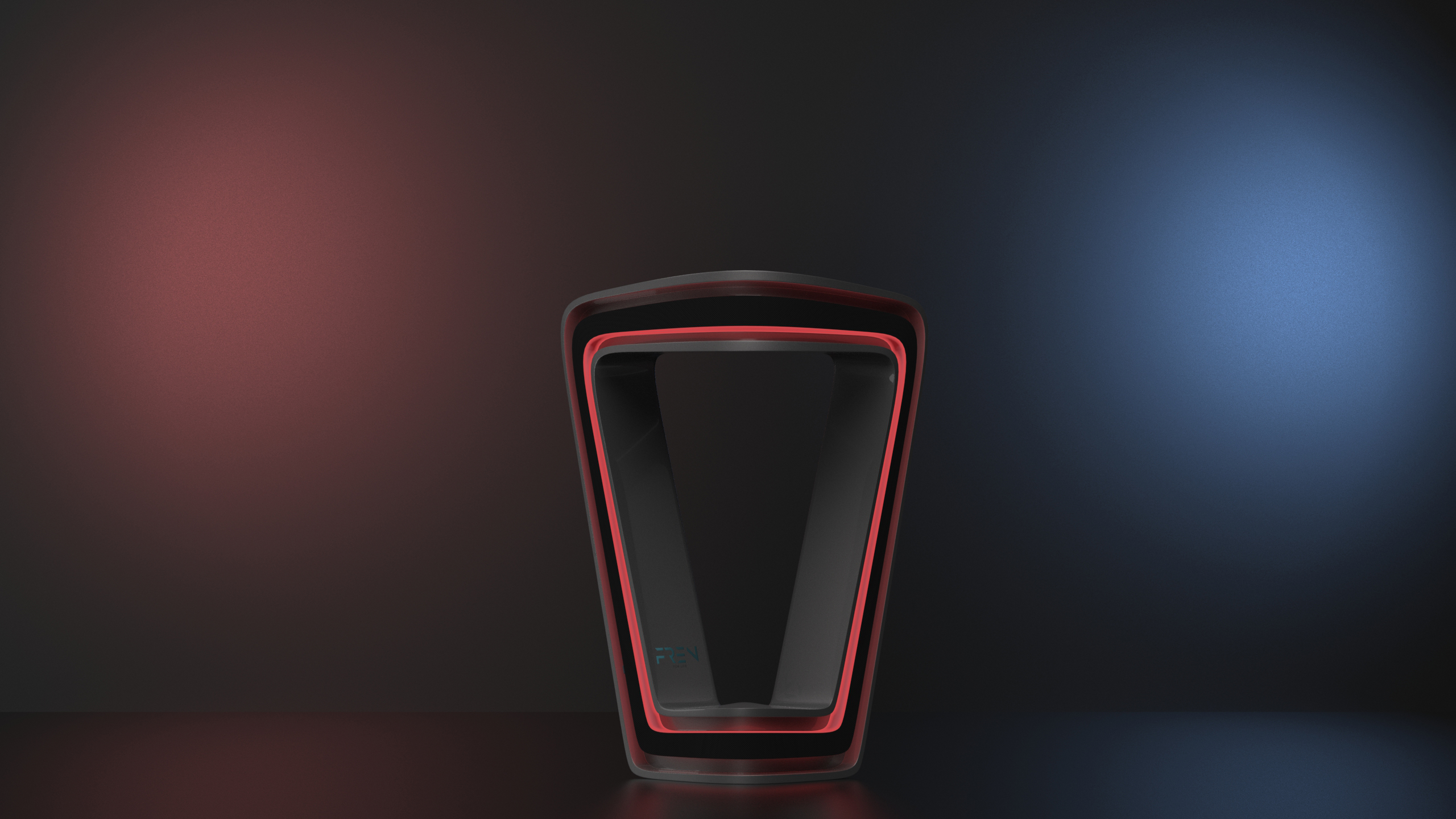
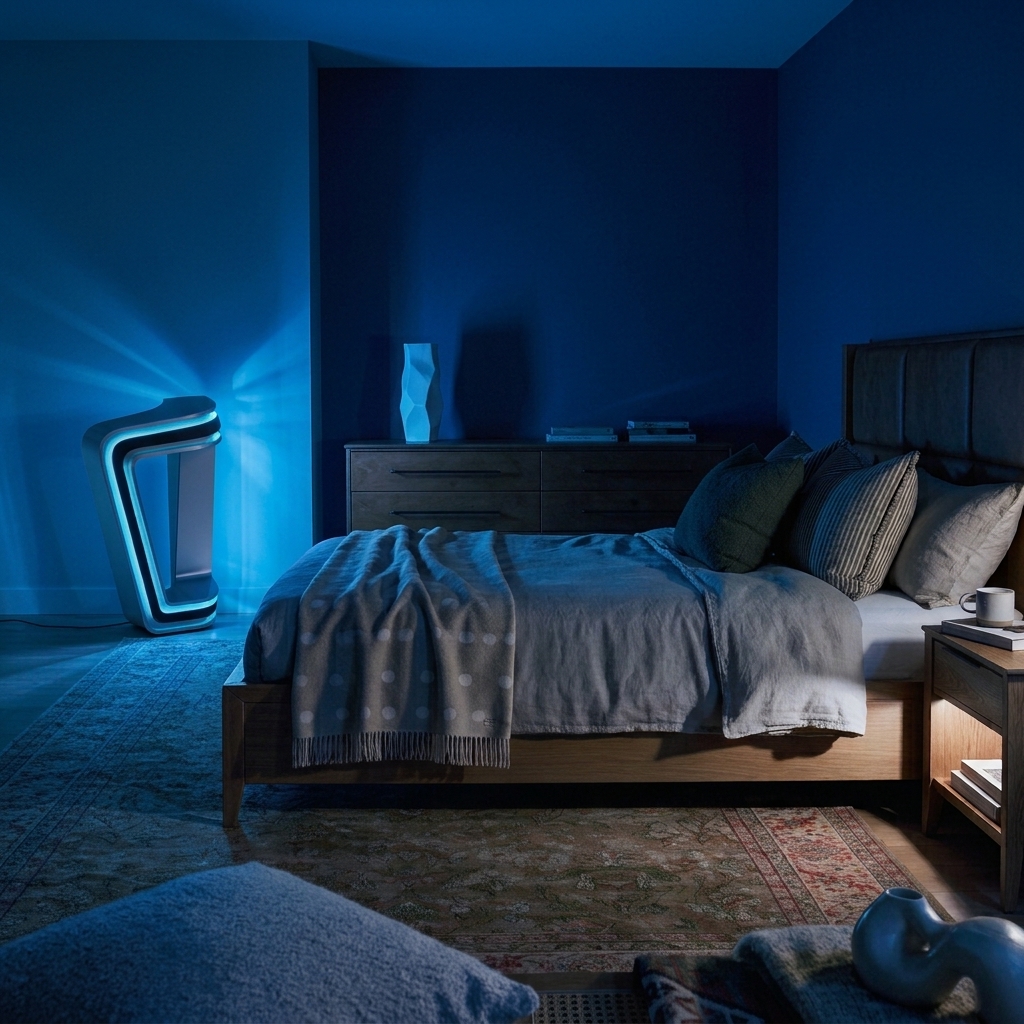
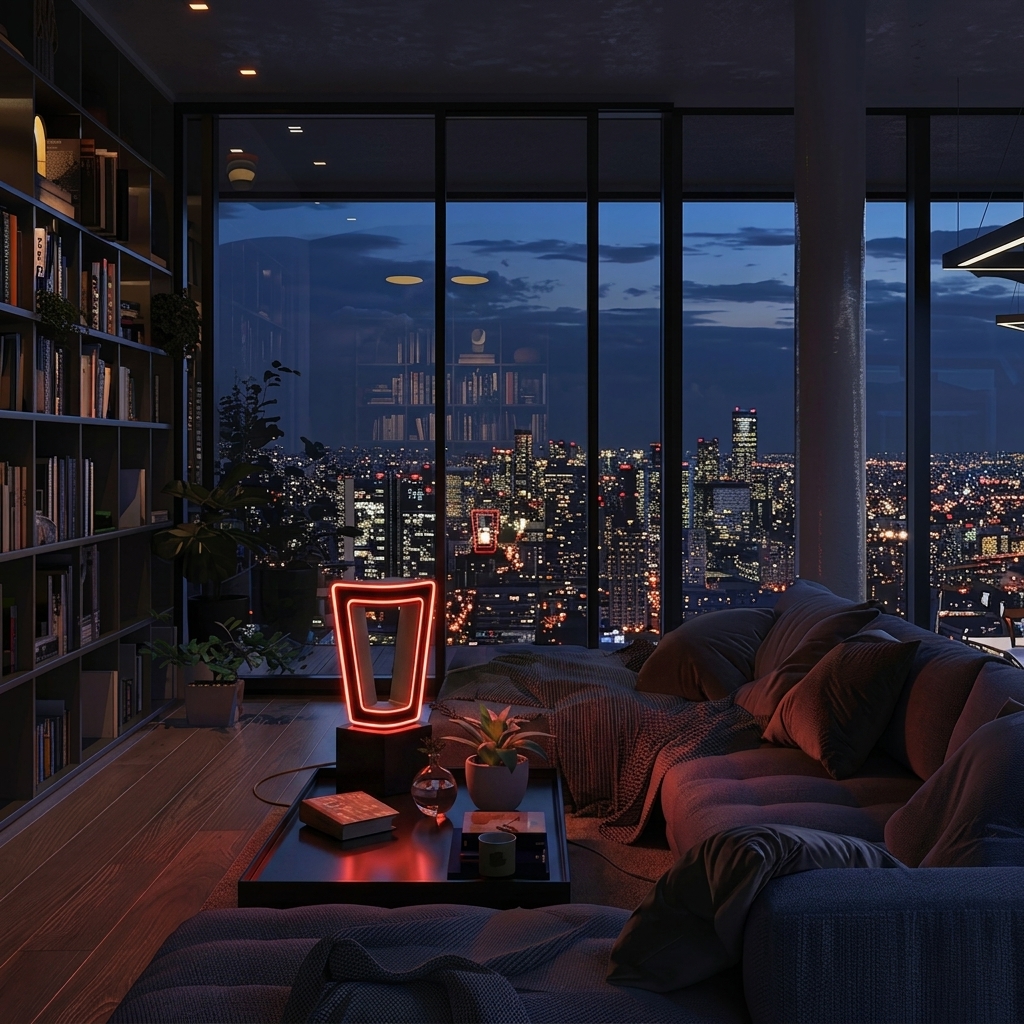
The lamp awake: light is the whole interface.
Feeling alone and being alone are not the same thing.
You can be surrounded by friends and hate every second of it. You can be home alone all week and never once feel lonely. The two get treated as one condition, which is why the usual advice, go out more, see people, fails so many of the people who need it.
Interviews and a survey run for this project pointed the same way: there is no single common cause behind a lonely state of mind. Because the cause is not the same from person to person, the coping mechanism cannot be either.
How do you slow the rise of loneliness among individuals through a tangible product, rather than another app telling them to talk to someone?
A product that makes you feel better by working through the body first, using the reflexes of breath, light and touch instead of asking you to explain yourself.
Loneliness does not stay a feeling. It becomes a health record.
The secondary research behind Fren mapped six ways a lonely state of mind turns physical. Every one of them is a compounding loop: the symptom deepens the isolation that produced it. Designing for the feeling early is cheaper than treating any of the six later.
Broken, shallow sleep and frequent waking, which sharpens everything else on this list.
Disinterest in doing anything social, so the invitations stop arriving and the loop closes.
A sedentary lifestyle and inactivity, often paired with eating as company.
Feelings of remorse and guilt turned inward, at yourself, about yourself.
Headaches and body aches that persist without an obvious physical cause.
Continuous reliance on social networking as a substitute for being with people.
164 people described their loneliness. No two answers matched.
The survey ran anonymously, because people answer honestly about this only when their name is off the page. Alongside the scaled questions sat three open ones: what gives you the feeling, what do you do with it, and what do you wish for. The scaled answers scattered. The wishes converged, and that is where the product came from.
“A warm hug.”
“Sunshine.”
“Peace.”
“I wish for a companion. It doesn’t matter if our thoughts don’t match. Just in need of a physical presence.”
“Someone who gives me a hug and says it’s alright, I’m with you.”
“Lack of people around, silences, sad music, and low-level light increase the feeling.”
Verbatim answers from the survey. Nobody asked for an app, a therapist or a chat feature. They asked for warmth, light and presence.
Ted Wiles’ felt-covered toaster only works while it is squeezed against the body. An everyday object that charges you a hug for its service. Proof that a household product can trade in feeling without announcing it.
Five to twenty pounds of even pressure, borrowing deep pressure stimulation from therapy and selling it as bedding. Already in millions of homes, and nobody who owns one has to explain why.
The first answer was a jacket. It did not survive review.
It was a good idea on paper. Heating plates front and back to mimic the warmth of a hug, a tight stretch fabric for the pressure of one, fuzzy linings inside the pockets for the hands. A jacket is so ordinary that the subtlety came free: nobody would know what it was for.
Then the reviews landed on the one thing the concept could not survive. A garment that works by getting warm is useless for half the year in this climate. The whole premise fell to weather.
So it went back to ideation, this time looking for something static that lives in a room instead of on a body. That is the moment Fren became a lamp and a band, and the phrase that has framed it since: finding companionship in an unconventional way.
Work through the body, not through conversation. Stay ordinary enough to sit in a room without explaining itself.
Heat as the primary channel, and anything worn on the torso. Both were hostage to the season.
Light and sound as the response, which cost nothing in summer, and a wristband small enough to be worn all year.
Fren is friend, spelled the way it gets typed. The tagline, For Life, is the promise that it stays in your daily life rather than arriving for a crisis and leaving again.
The band notices before you do. The lamp answers with light, and nobody has to be told anything.
A band that senses, a lamp that responds.
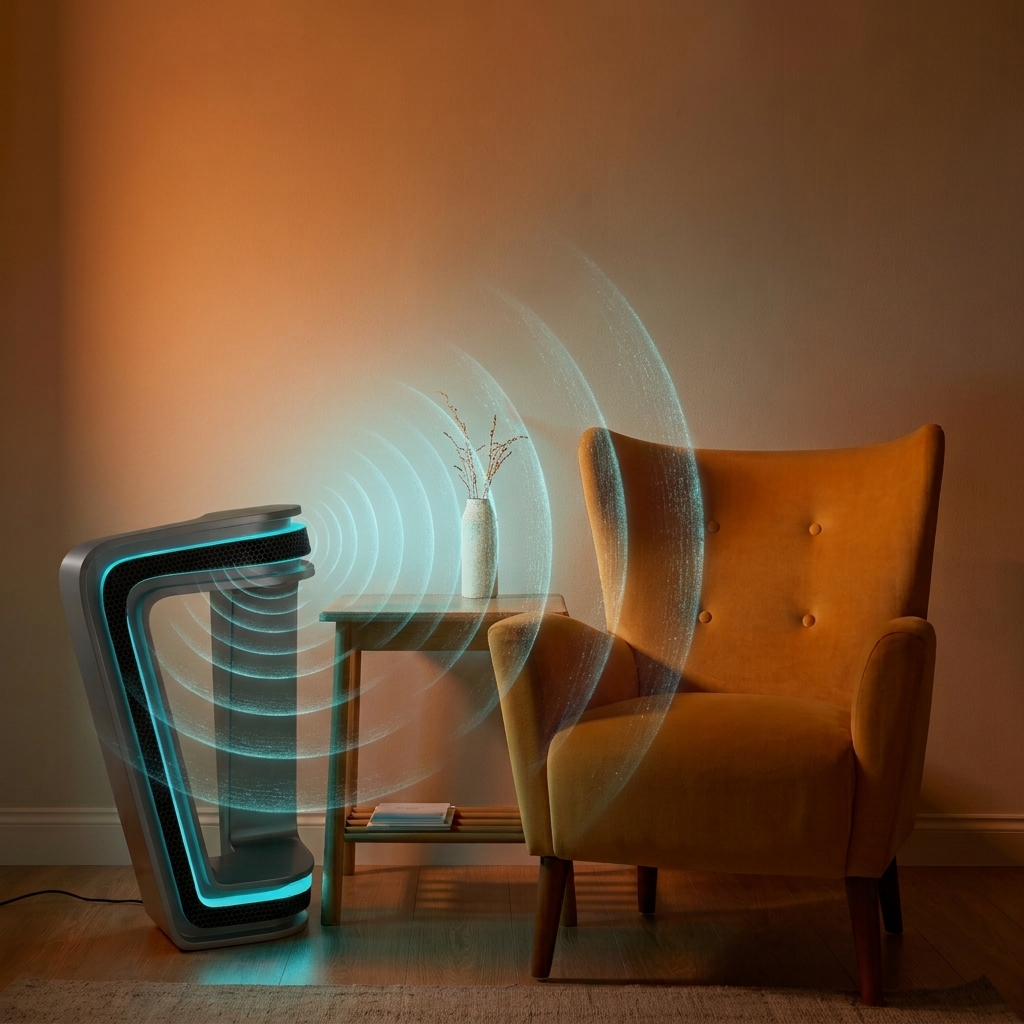
The wristband reads heart rate and skin temperature and watches for fidgeting. When both signals cross the line you set, it triggers the lamp. The lamp does not alarm, it distracts: a slow bloom and dim of coloured light that a breathing exercise can be followed against. The archway form was chosen so the light has something to wash across, and so the object reads as furniture rather than as equipment. The band is not the only way in: a smart watch or smart ring already on your wrist or finger can pair with the app and drive the lamp just the same.
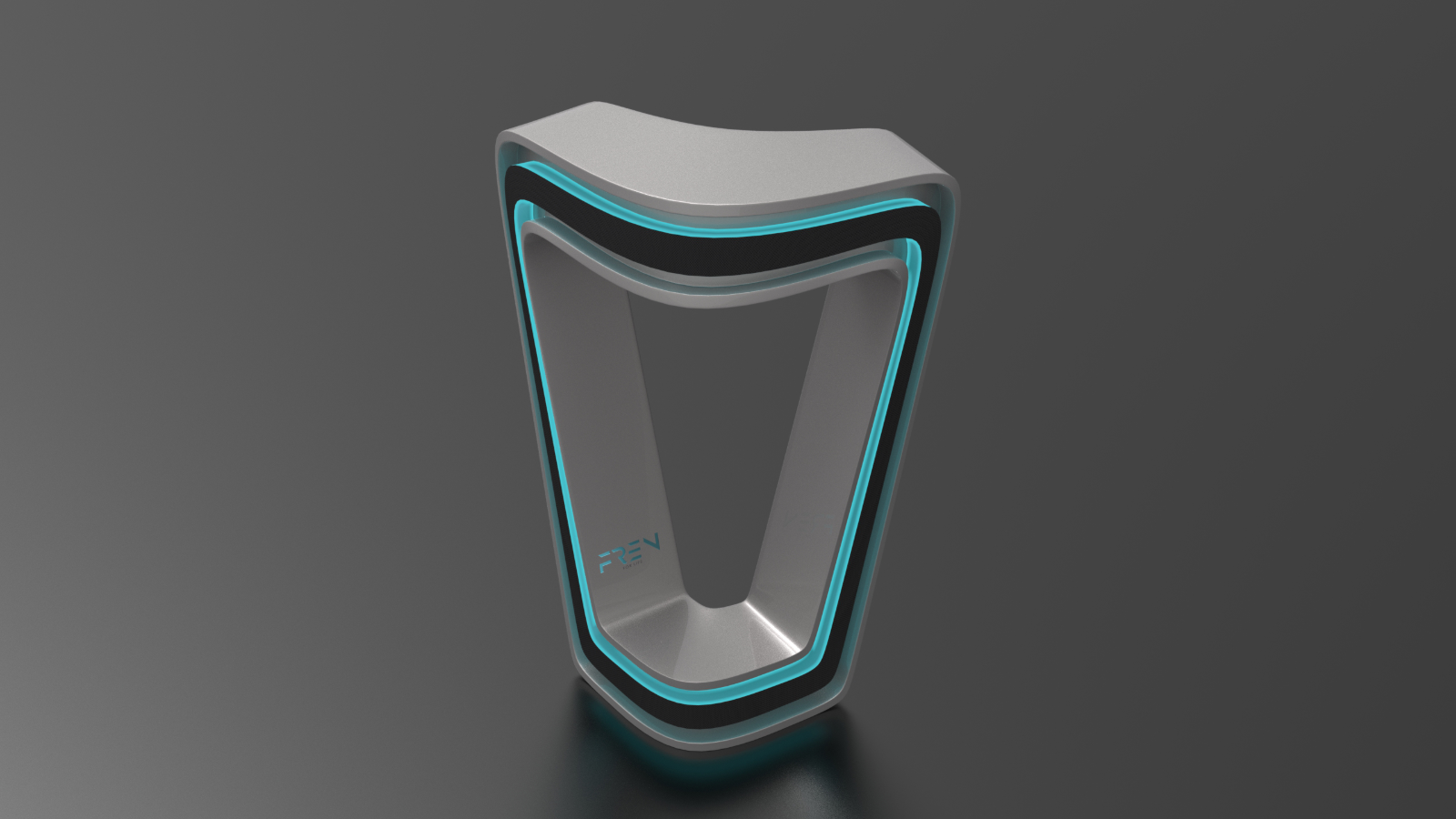
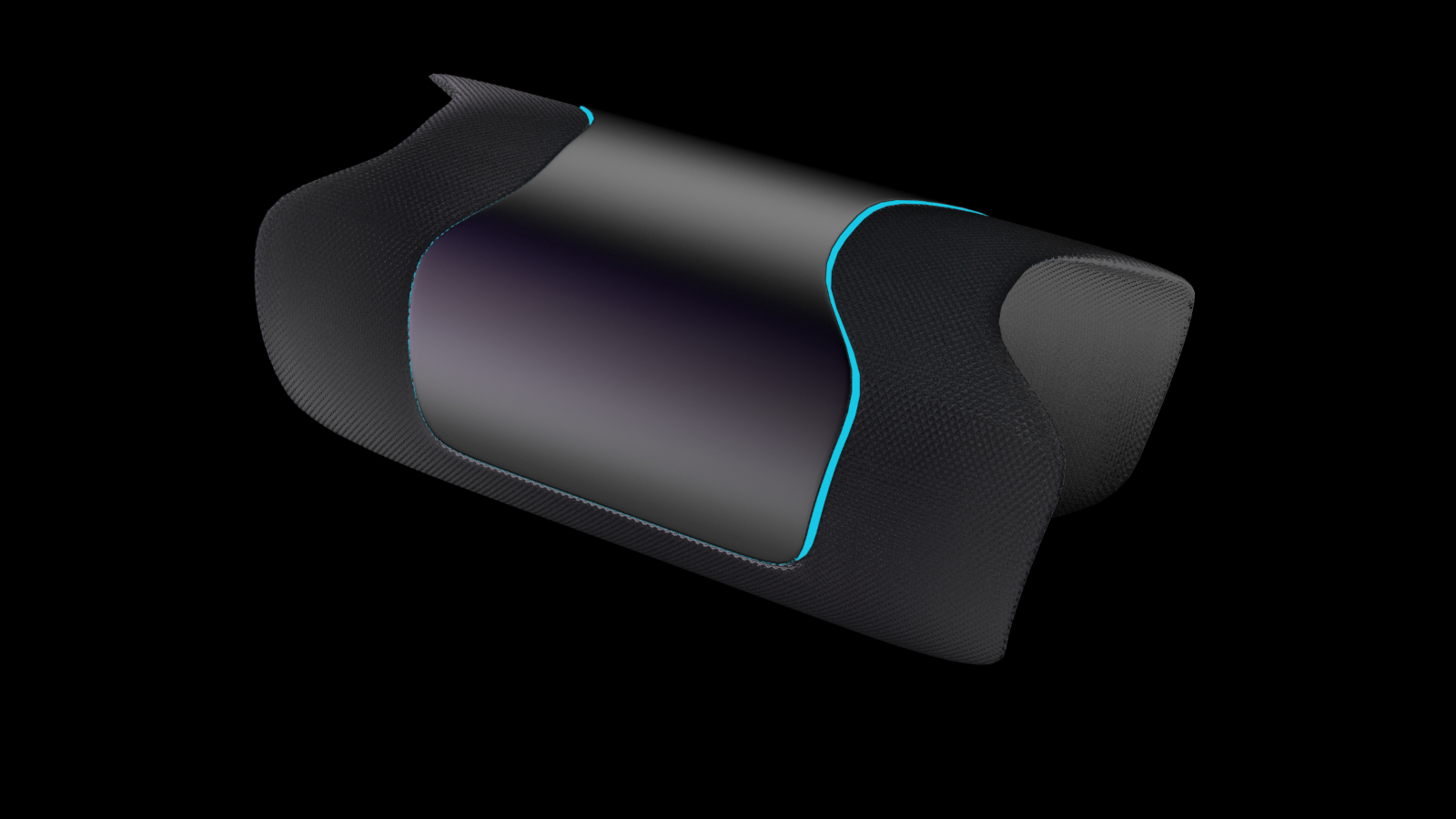
Dual RGB light channels, a speaker for soothing sound, a touchpad on the crown, and Bluetooth to the band and the phone.
Heart rate sensor, skin temperature, and an accelerometer for restlessness. One RGB light so the band can answer quietly on its own.
Where the thresholds, colours, breathing patterns and history live. Openable, but designed to be needed rarely.
The band is optional. A smart watch or smart ring you already own can connect to the app instead and drive the lamp from the same signals.
It has to look like furniture before it looks like help.
Three colour states, three rooms. The light is the only thing that changes, and it changes the room rather than the object. Nothing on the shell says what the lamp is for, which is the point: a guest sees a lamp.
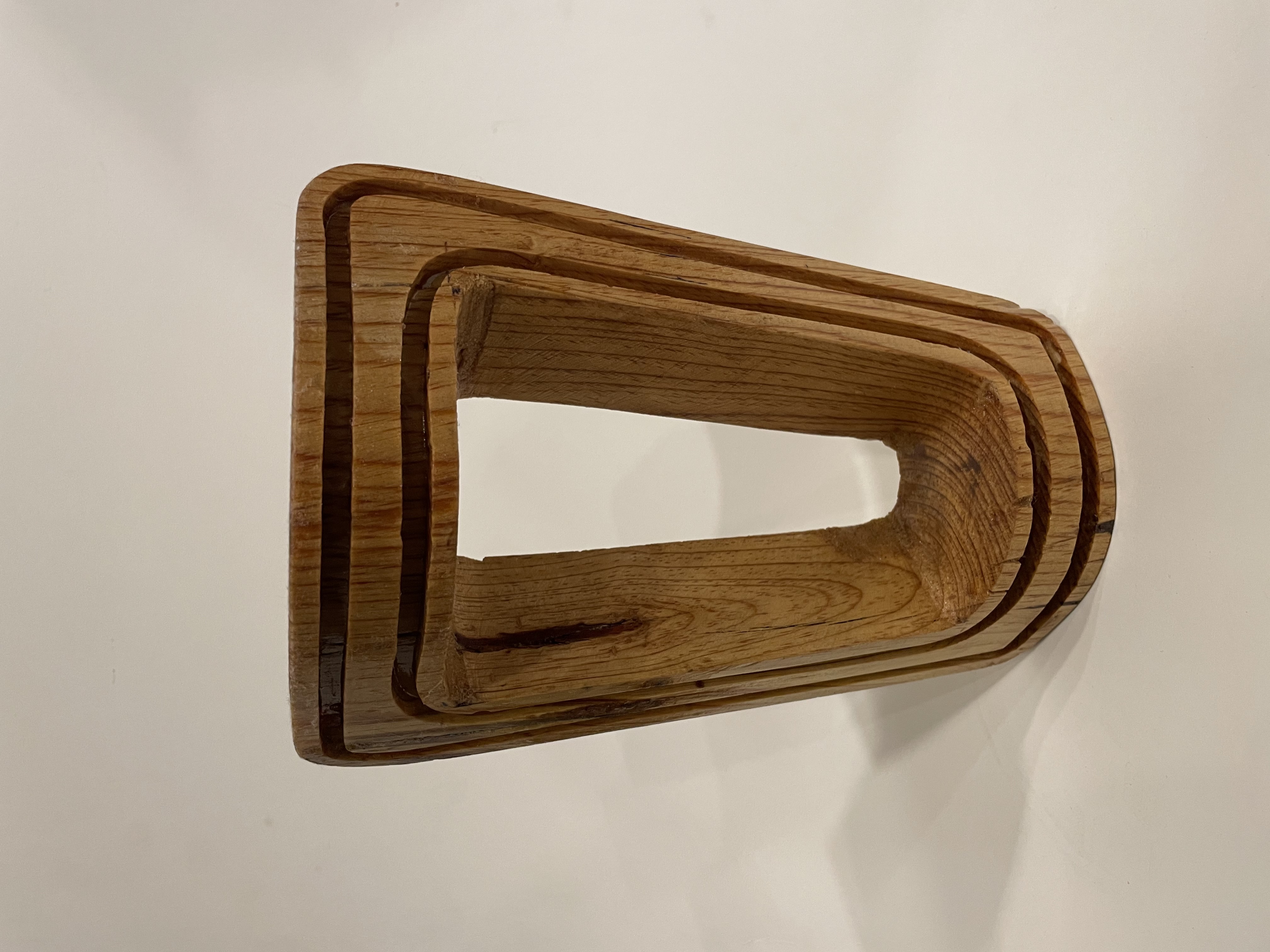
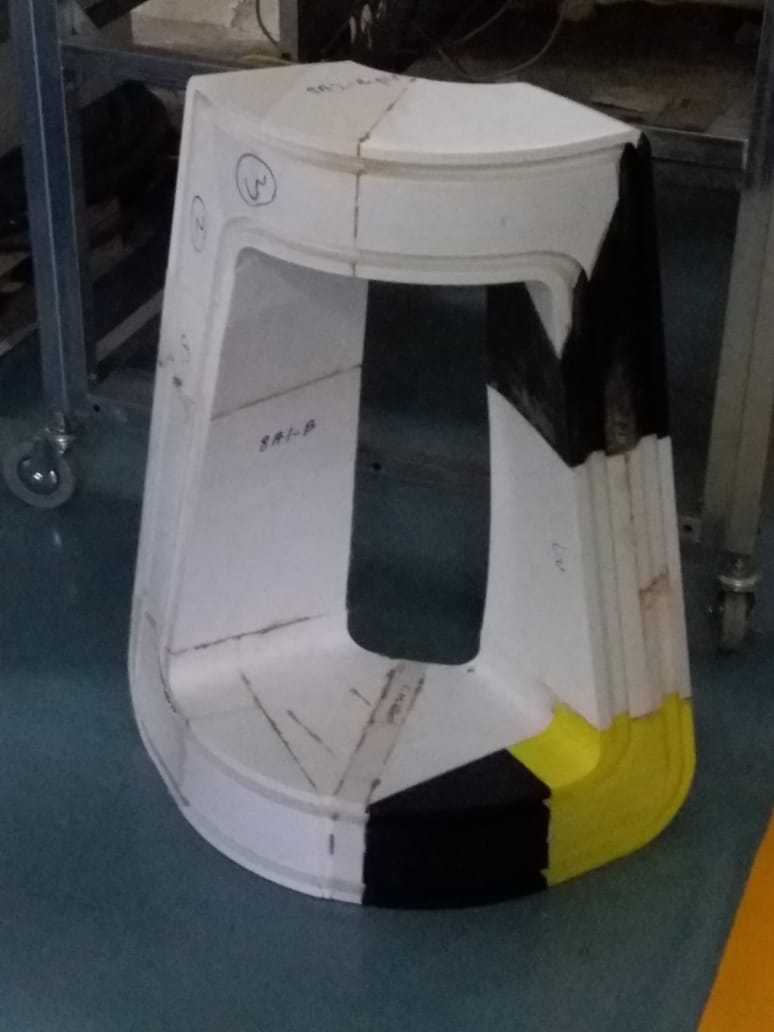
Two models, because a render will lie to you about size.
The form was cut twice before it was trusted. First at quarter scale in wood, to test the profile and the aperture in the hand. Then at full size, 3D printed and finished in sections, to stand it on the floor next to real furniture and see whether it read as an object you would live with or as a prototype someone left in the room.
Calm on screen, or it has no business asking you to calm down.
Cream instead of white to cut glare, one soft accent per state, rounded cards, and no red badges demanding attention. The lamp on the home screen is the real control: tap it and it wakes, and the colour and brightness you choose are what the hardware does. It is a working prototype, so pair the devices, run a breathing session, and the heart rate settles as it would on the wrist.
Live prototype. Start at onboarding, pair both devices, then try a session.
A product that reads your body has to be easy to disagree with.
A raised heart rate can mean a panic attack or a flight of stairs. So the trigger is yours to set: a bpm threshold, a temperature rise, whether both must agree, and a silent mode that uses light only after eleven. Every alert can be dismissed with "I'm okay", and dismissals are what tune it.
The same restraint runs through the copy. Fren reports what it saw and offers one action. It does not diagnose, it does not congratulate, and it never implies you are behind on anything.
Hardware, software and the argument for both, in one piece.
Fren ended as a full-size physical model, a set of renders, a sensor and electronics layout, and an app prototype you can actually use, all resting on primary research rather than on a mood board.
It is the kind of project we still take on: an object and its software designed together, where the interaction is the product and the light is the interface.
Have something worth building well?
Tell us what you are building. We reply within two working days.
Start a project →