A passenger's experience at the airport.
One app for the whole journey, from booking to arrival, with a self-sovereign wallet that lets a passenger prove who they are with a single scan. No passport handed over four times, no paperwork repeated at every desk.
Service & product design
Storyboard · UI design
Service blueprint
Verifiable credentials
Only four in ten passengers are satisfied with the airport as it is.
The same passenger proves who they are four times before they sit down.
Booking, parking, check-in, security, boarding: each step is run by a different party, holds its own copy of the passenger's documents, and asks for them again. The passenger carries the burden of stitching the journey together, and the airport carries the risk of storing everything.
Long waits, queues and getting lost have turned something people once looked forward to into something they dread. We mapped the end-to-end journey with real travellers, then rebuilt it around one question: what if the documents stayed on the phone and the airport only ever received a proof?
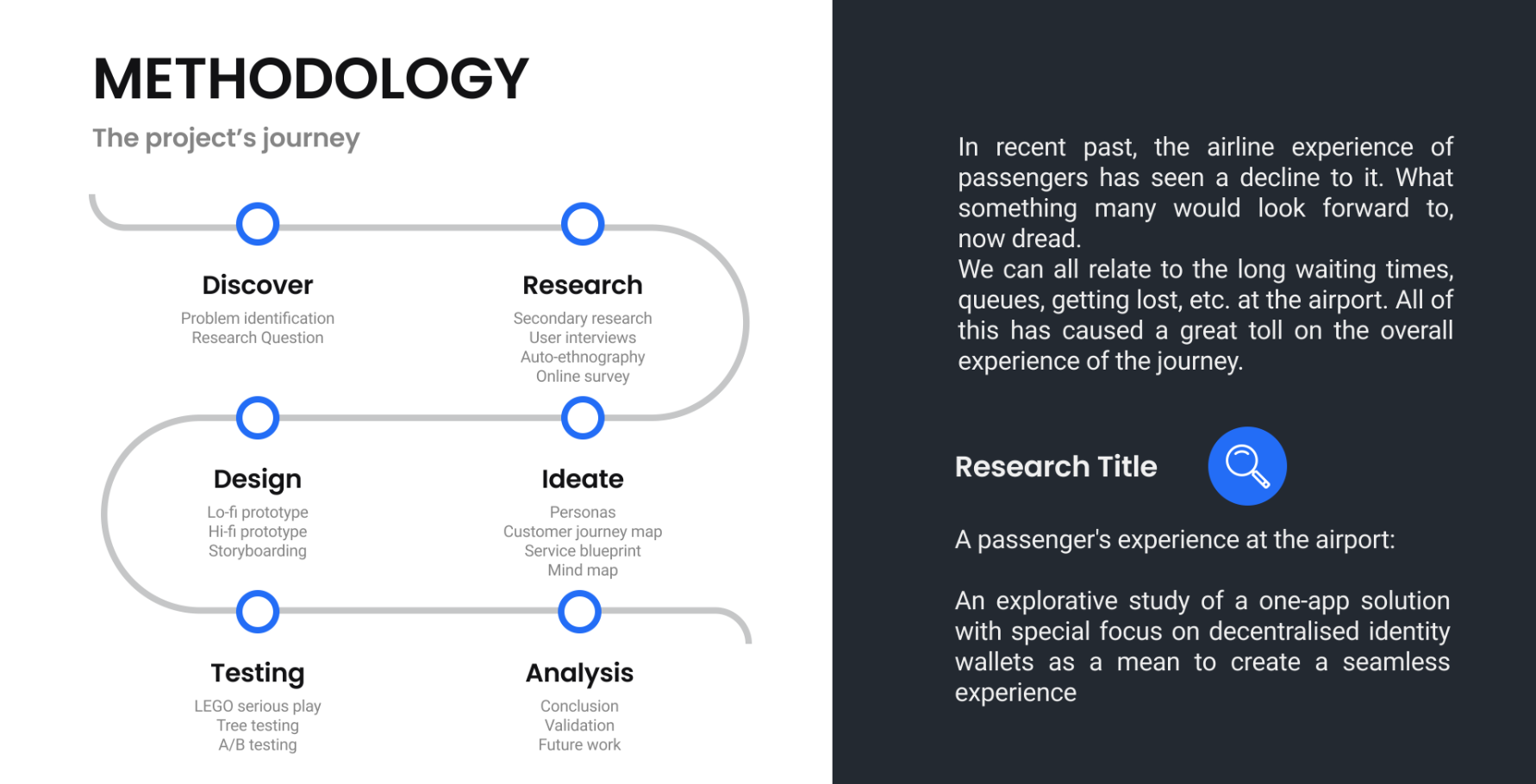
Six phases, from problem statement to validated prototype.
Secondary research and an online survey set the scale of the problem; interviews and auto-ethnography set its texture. Everything that followed, personas, journey map, blueprint, prototype, was traceable back to something a passenger said or something we recorded ourselves doing in a terminal.
A leisure traveller with children, and a business traveller with a meeting to make.
Two personas came out of four in-depth interviews. They want different things from a trip, but they fail in the same four places, which is where the product was aimed.
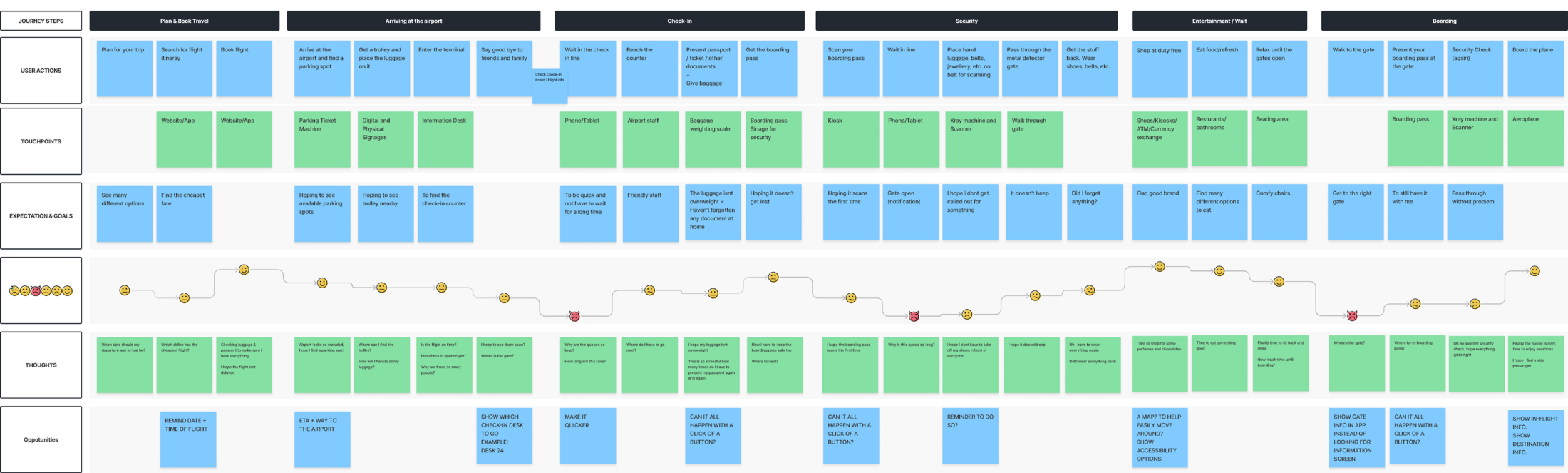
Six phases, and the emotion drops in the same three places every time.
Actions, touchpoints, expectations, feeling and thoughts were logged across plan and book, arriving, check-in, security, waiting and boarding. Every dip in the emotion line became an opportunity written as a question, which is what the app was scoped from.
The documents never leave the passenger's phone. The airport receives a proof, not a copy.
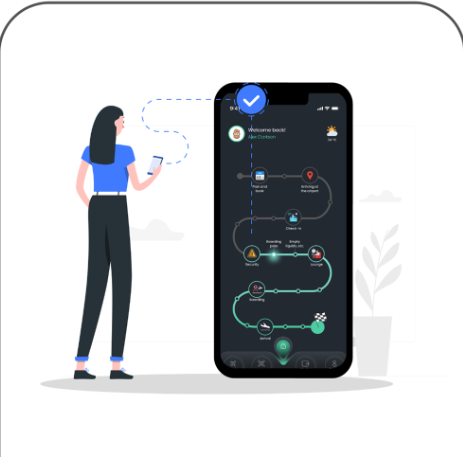
The trip as a track, not a list of tabs.
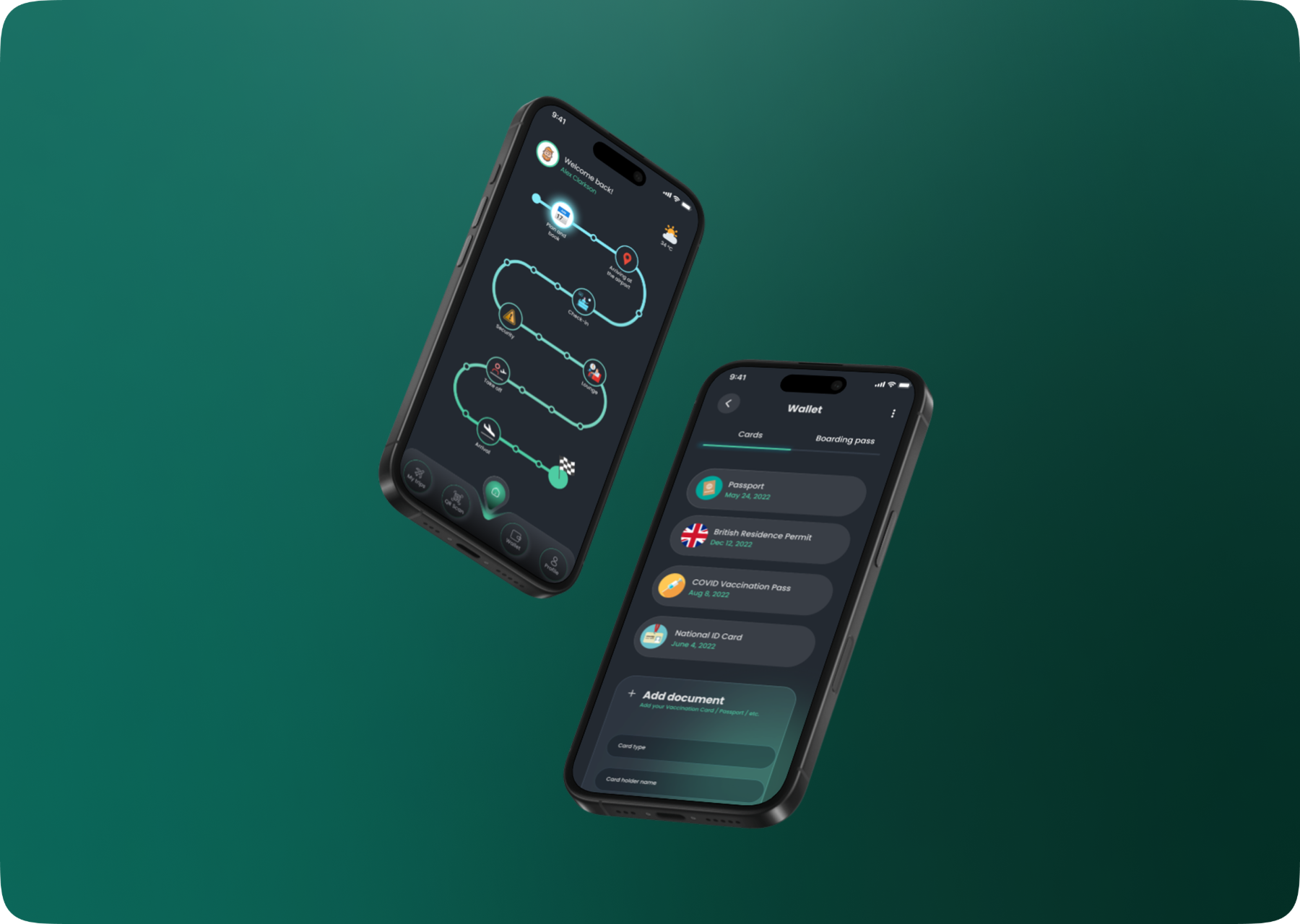
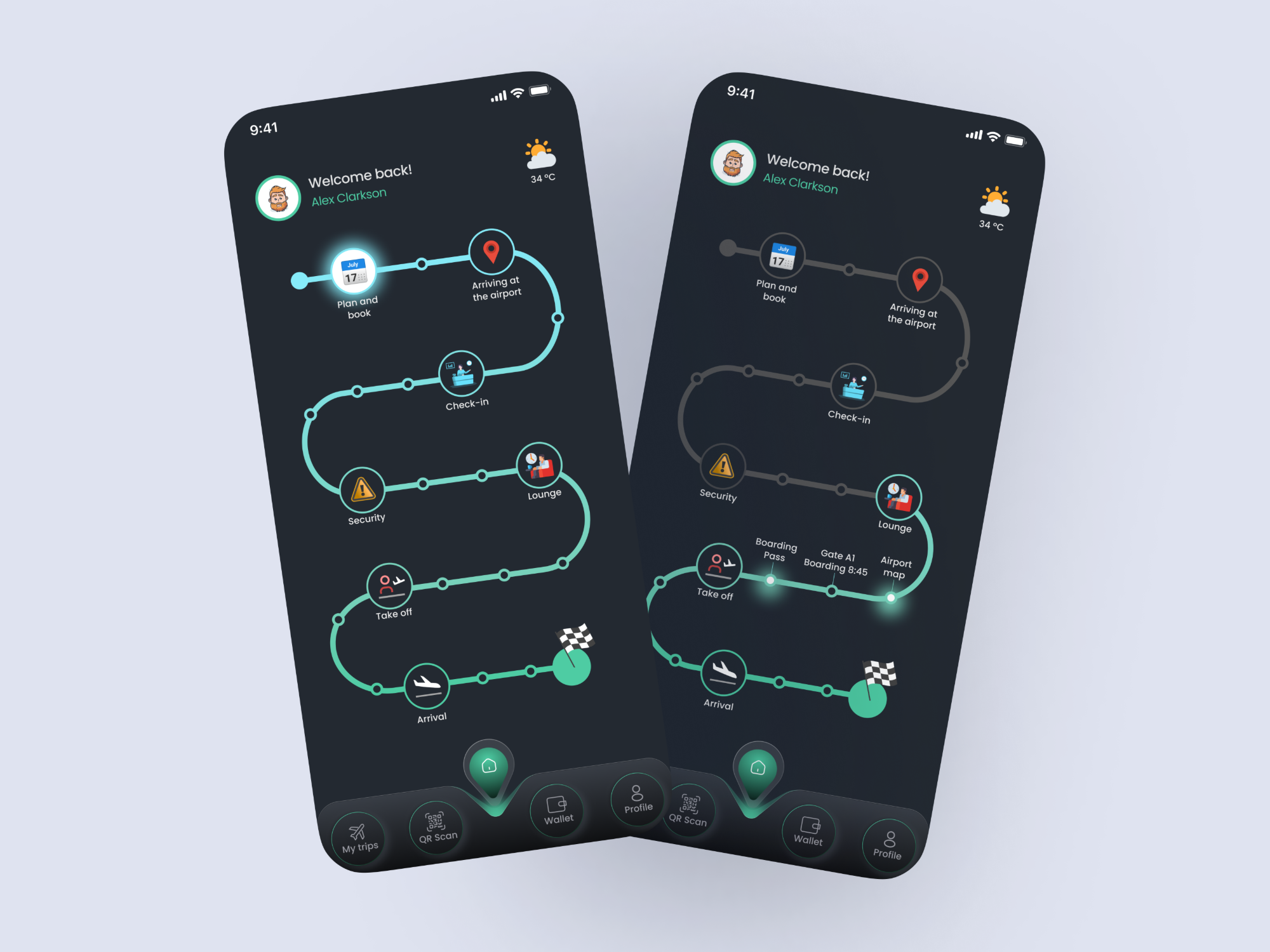
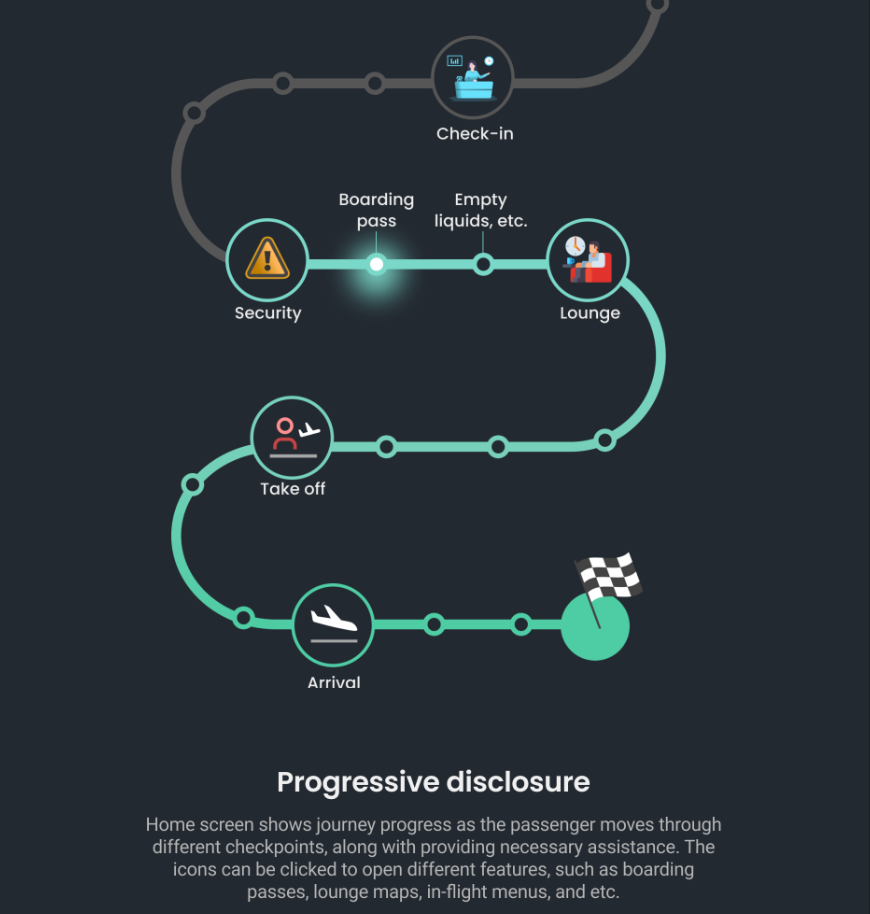
The home screen draws the journey as one continuous path: plan and book, arriving at the airport, check-in, security, lounge, boarding, take off, arrival. Steps behind you go grey, the step you are in glows, and the next one is always the nearest thing to your thumb.
Progressive disclosure keeps it calm: tapping a step opens only what that moment needs, the boarding pass, gate and boarding time, the lounge map, the in-flight menu, so the passenger is never searching a menu while standing in a queue. Weather for here and for the destination sits on the same screen.
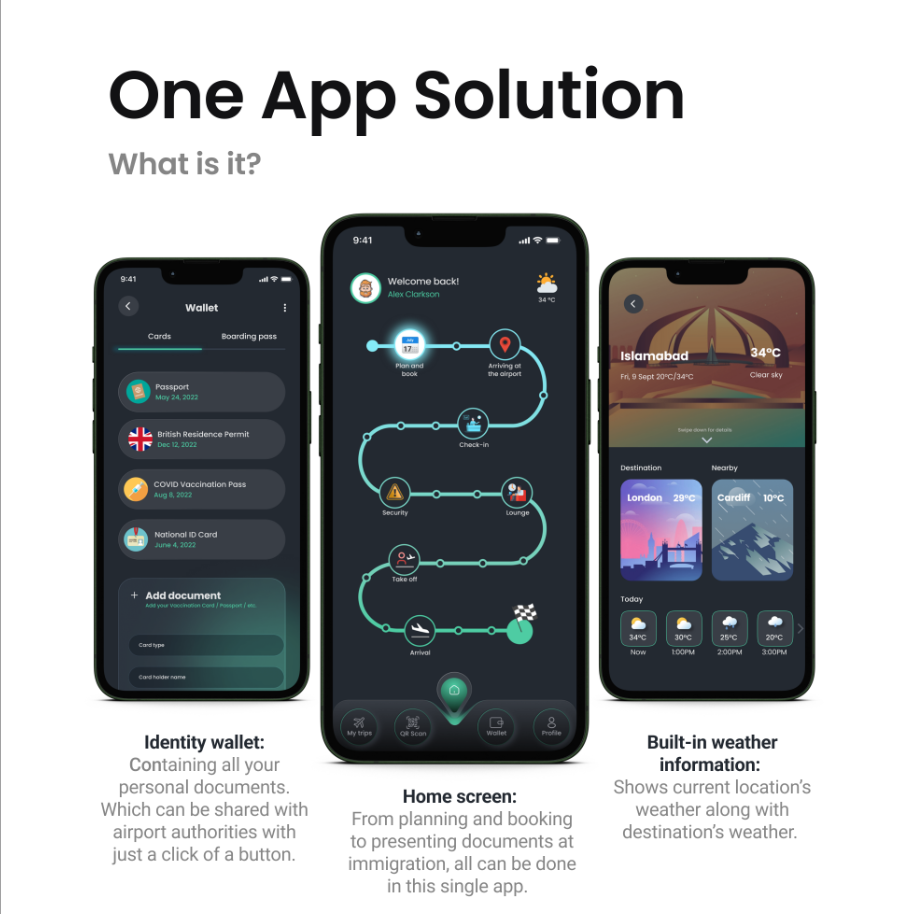
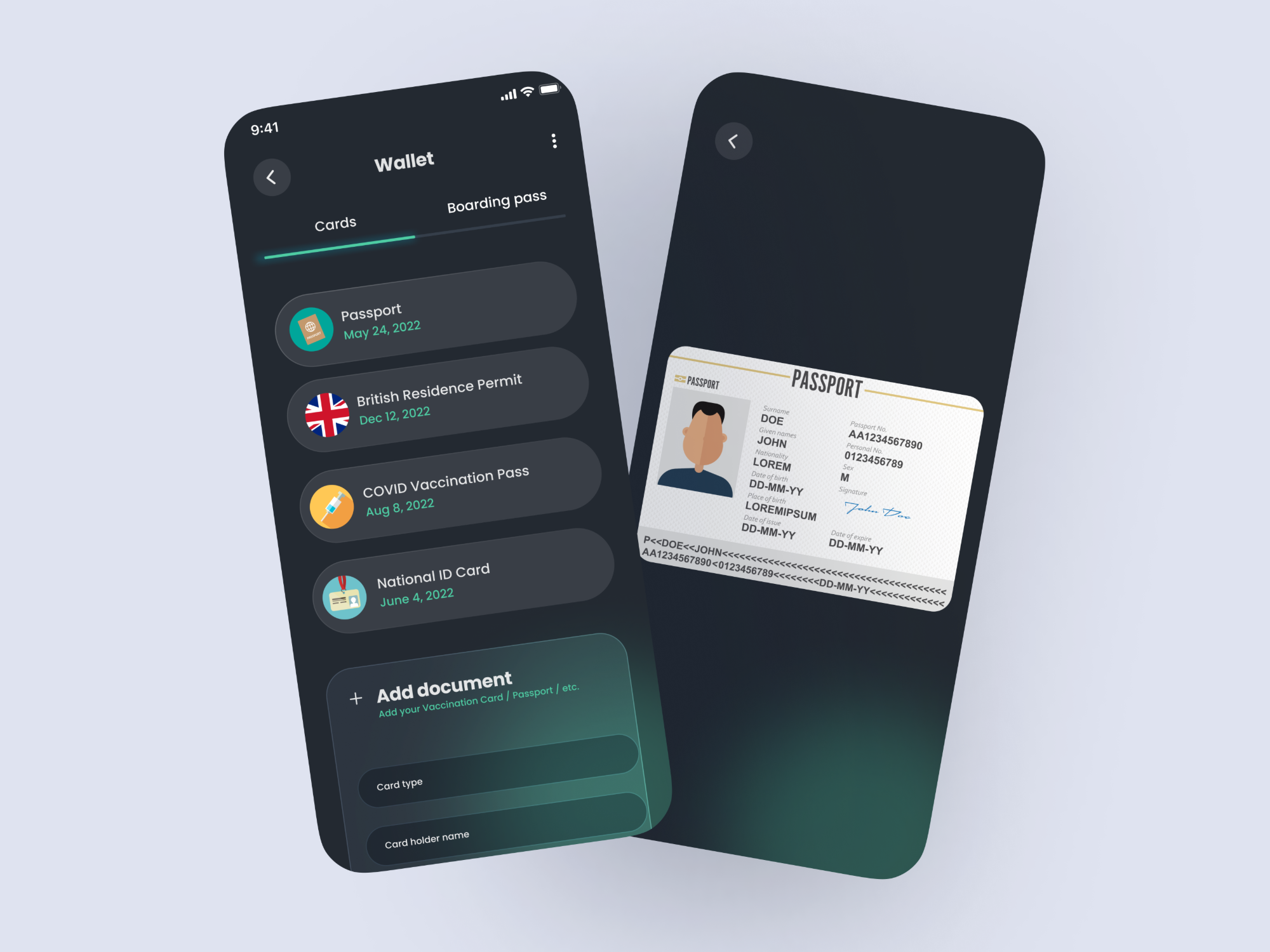
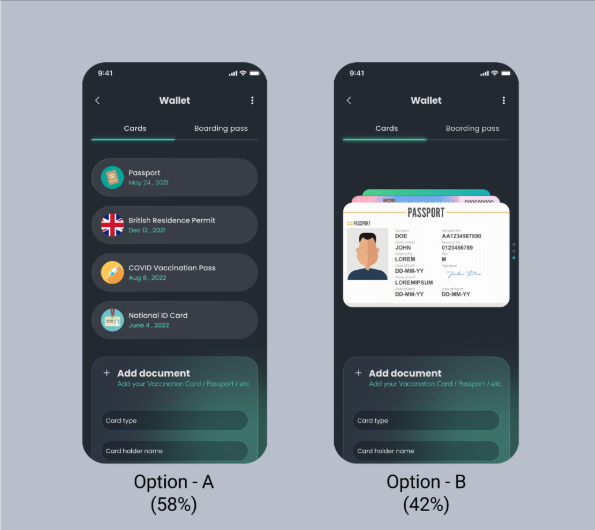
Passport, permit, vaccination pass, ID and the boarding pass in one place.
Each credential is held as a verifiable document with its own expiry, added once and reused for every trip. Cards and boarding passes are split into two tabs, because one is long-lived identity and the other is valid for a single flight.
Issuer signs, wallet holds, verifier checks the signature.
The government issues signed credentials to the passenger's wallet and writes the identifiers to a distributed ledger. The wallet checks validity against that ledger and keeps the documents on the device.
At the desk, the airport acts as verifier: it receives a presented proof and confirms the signature against the public DIDs. Nothing is uploaded, nothing is retained, and sharing always requires explicit consent from the passenger, which is what self-sovereign identity means in practice.
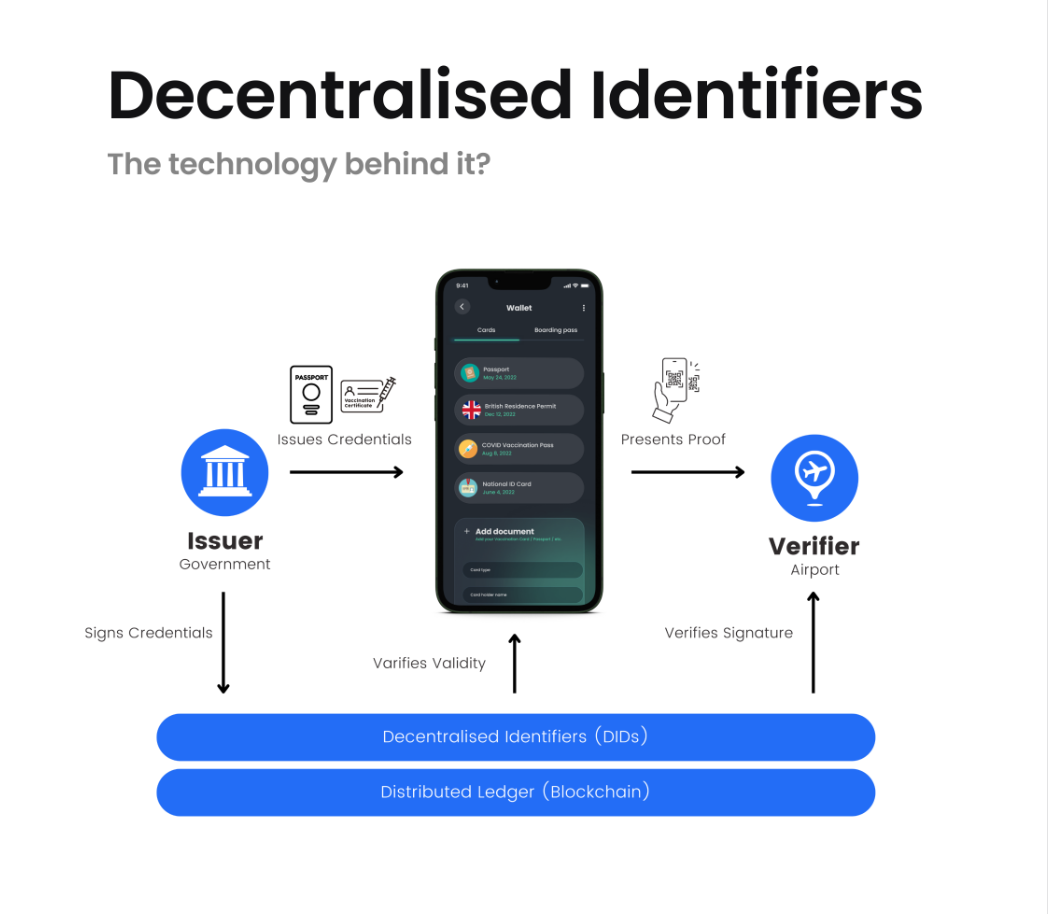
Document verification from a phone, built on blockchain and decentralised identifiers. The issuer, in this case the government, signs a credential, stores it in a distributed ledger, and issues the document to the passenger's digital wallet.
The wallet checks that credential against the ledger and keeps a copy of the document. When the passenger presents proof of identity, a digital passport or any other digital document, the airport's system verifies it by retrieving the signed credential from the distributed ledger.
A digital identity wallet lets a person contact and deal with third parties securely and in encrypted form. Built on self-sovereign identity principles, it gives the user complete control of their data: they own it and they process it.
Nothing leaves the wallet without explicit consent from the passenger.
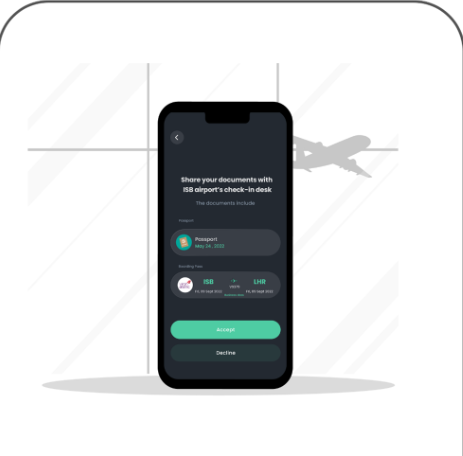
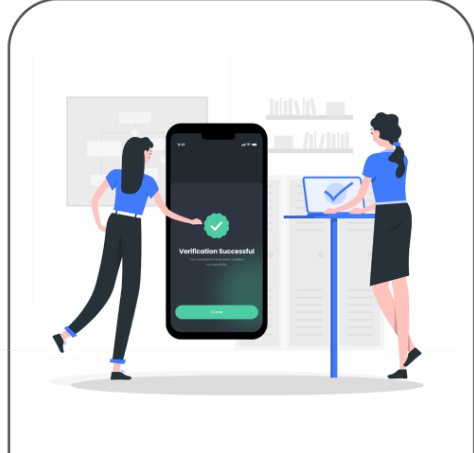
Scan, consent, verified. Three taps at the desk.
The storyboard walks the moment that mattered most in research: the passenger reaches the counter, scans the QR code on the desk, sees exactly which documents are being requested, and accepts or declines. Verification lands on both screens at once and the boarding pass is issued into the app.
The same pattern applies again at immigration. Sixty-seven screens were built into a hi-fi interactive prototype so the whole flow could be tested as a scenario rather than a set of pictures.
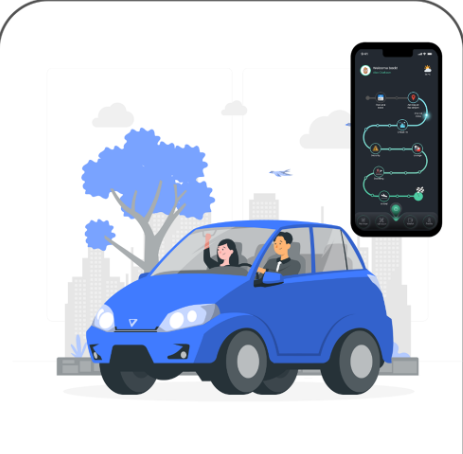 1
1
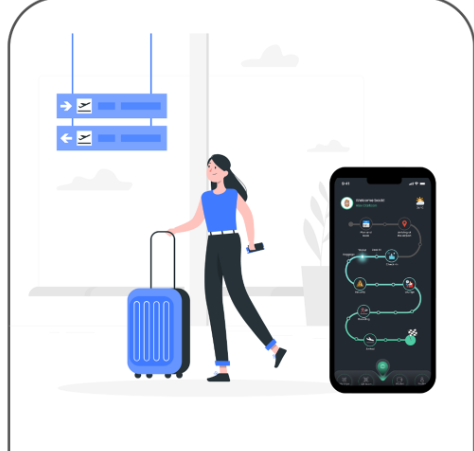
 2
2
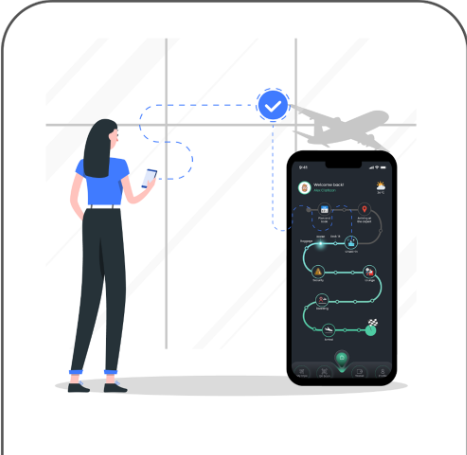 3
3
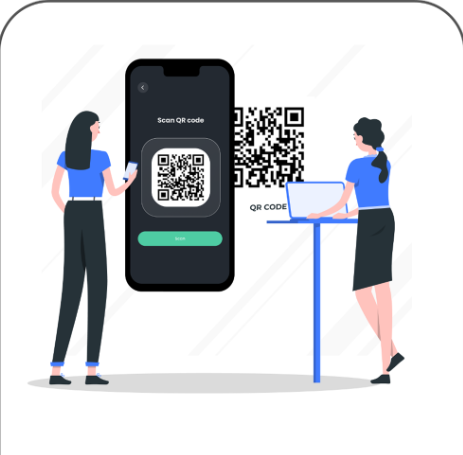 4
4
 5
5
 6
6
 7
7
 8
8
Storyboard, eight frames covering arrival through cleared check-in
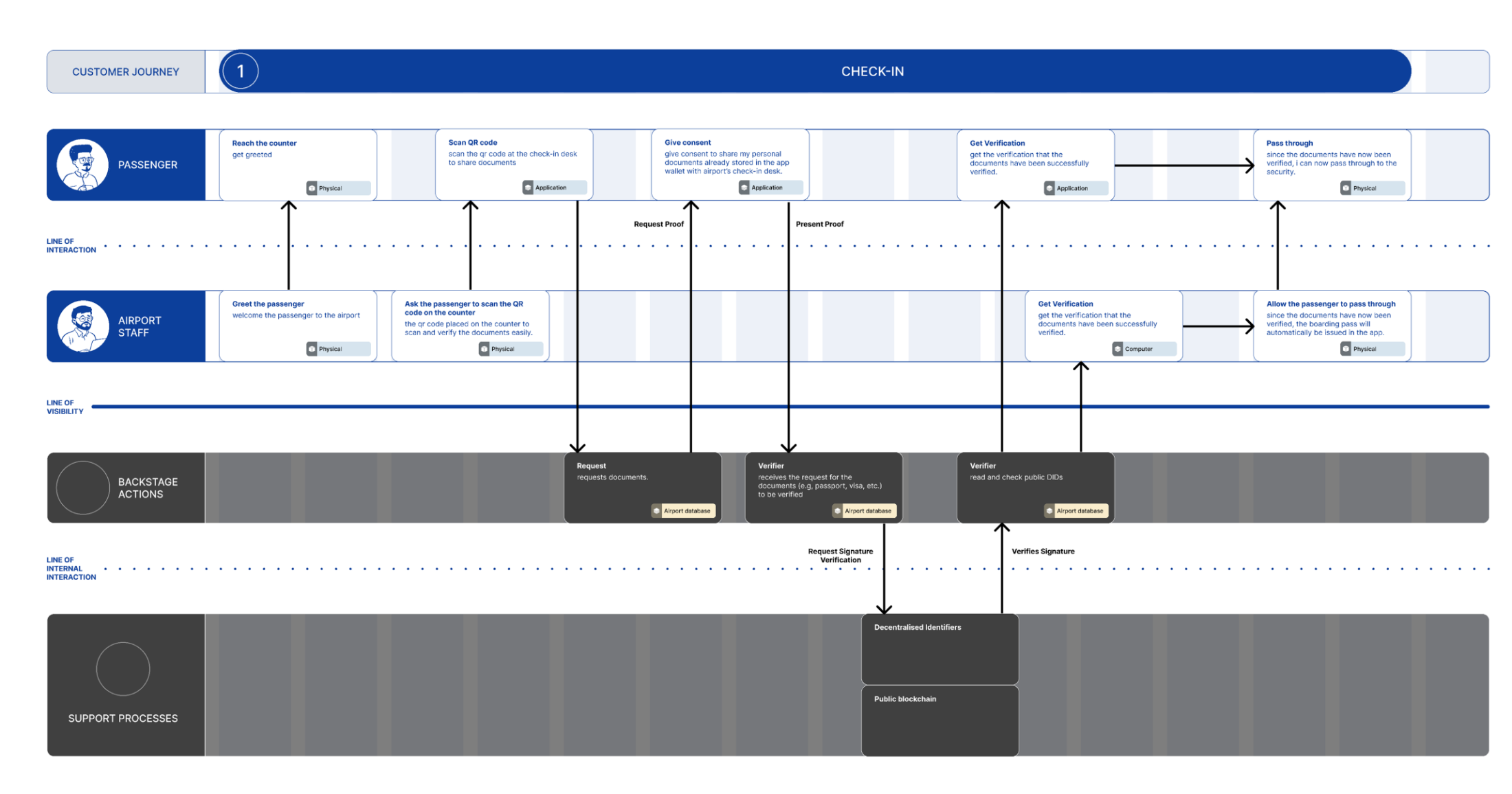
What the passenger sees, and what happens under the line of visibility.
The blueprint pins the check-in phase to its machinery: passenger actions, staff actions, backstage requests against the airport database, and the support layer of decentralised identifiers on a public blockchain.
Request proof, present proof, verify signature. Writing it out this way made the trust model reviewable by people who will never open the app, which is what an airport needs before it agrees to stop collecting documents.
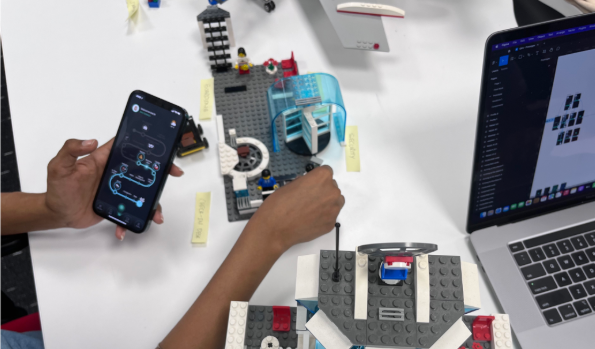
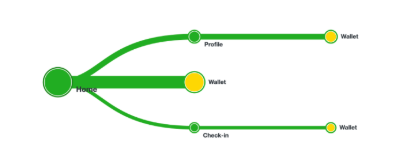
A LEGO® airport on a table, then a tree test to fix what it exposed.
Roleplay surfaced problems a click-through never would: participants walked LEGO® figures through labelled checkpoints while using the prototype, and told us where they got stuck.
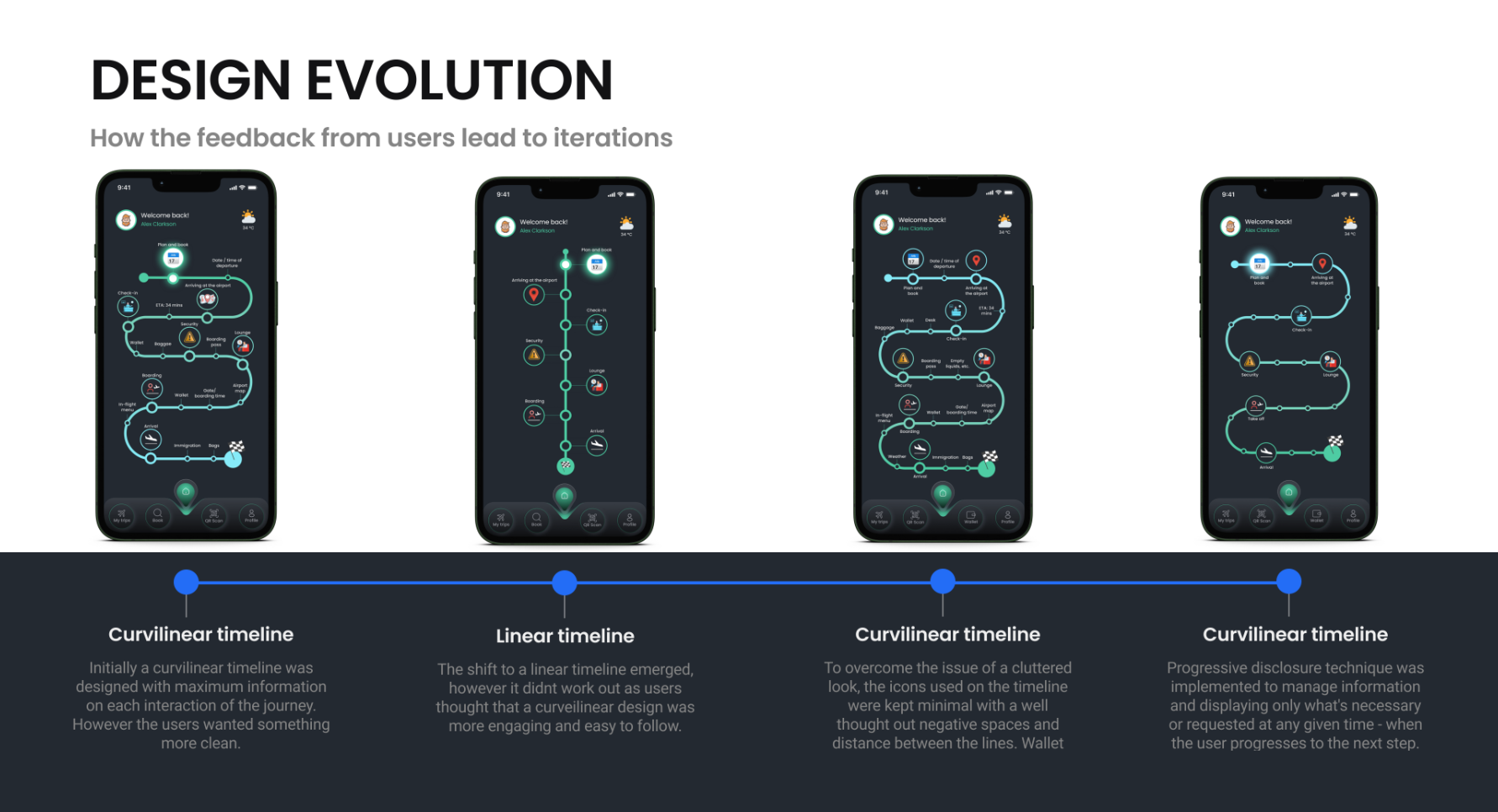
Four passes at the same screen, each one taking something out.
The first curvilinear timeline showed everything at every step, and users called it cluttered. A linear version was cleaner but lost the sense of a journey, and testers said the curve was more engaging to follow.
So the curve came back with fewer icons, more negative space, and the wallet promoted to the toolbar. The final pass added progressive disclosure: each step reveals its detail only when the passenger reaches it.
One system, from login to landed.
Boarding pass, booking, wallet and document consent, live weather for here and the destination, and the arrival state. The same dark surface, the same green accent, and the same rule throughout: show the passenger only what the current step needs.
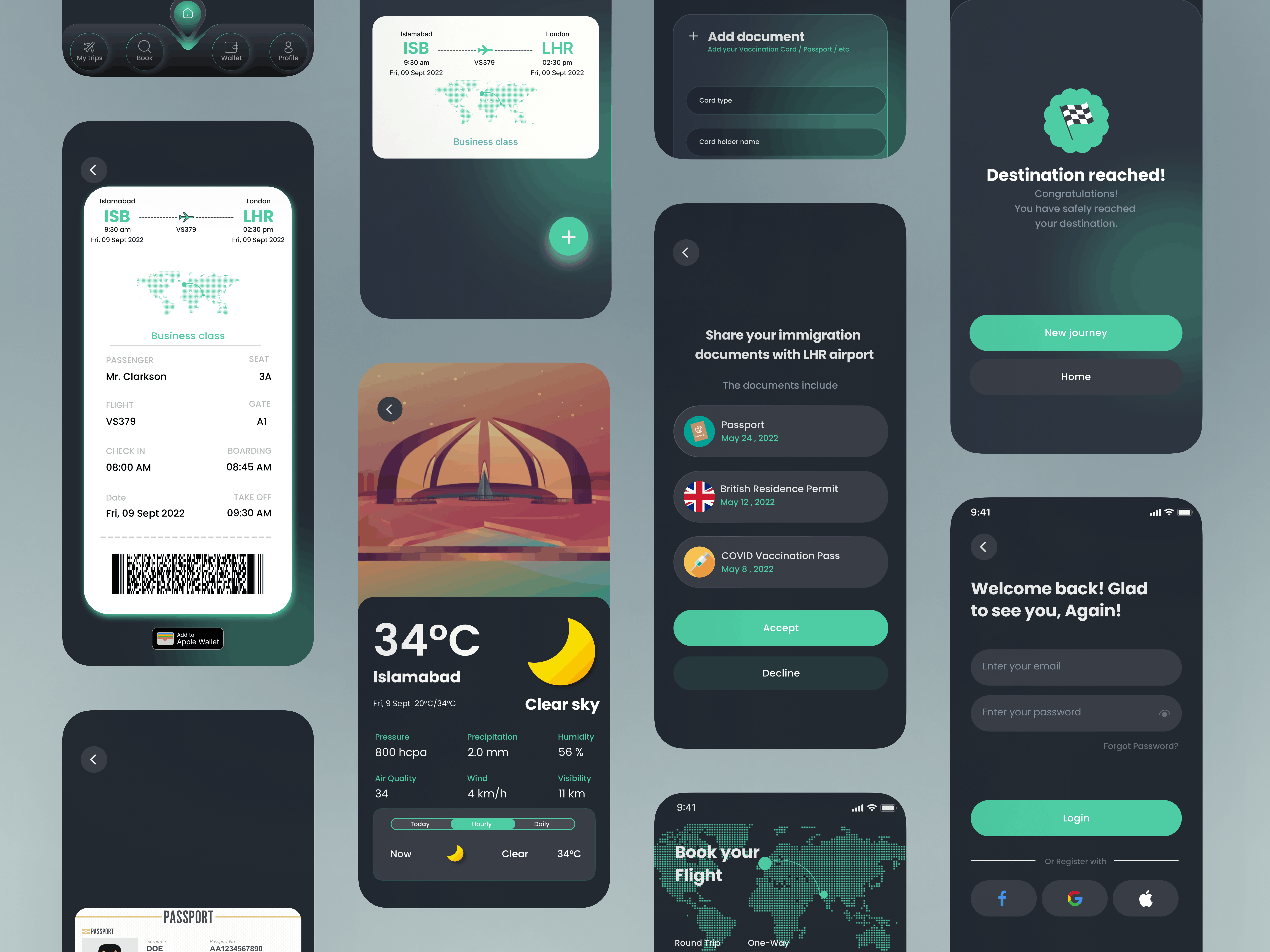
A journey the passenger can see, and an airport that stores less.
The concept collapses five separate document checks into one consented scan, and gives the passenger a single view of where they are in the trip and what happens next.
Nine in ten of the 41 people surveyed said they would use one app for the whole journey, and would trust it with their documents if it moved them through the airport significantly faster. Because the credentials live with the passenger, the airport verifies rather than stores, which lowers the data it holds while making the desk faster for the person standing at it.
Have something worth building well?
Tell us what you are building. We reply within two working days.
Start a project →