
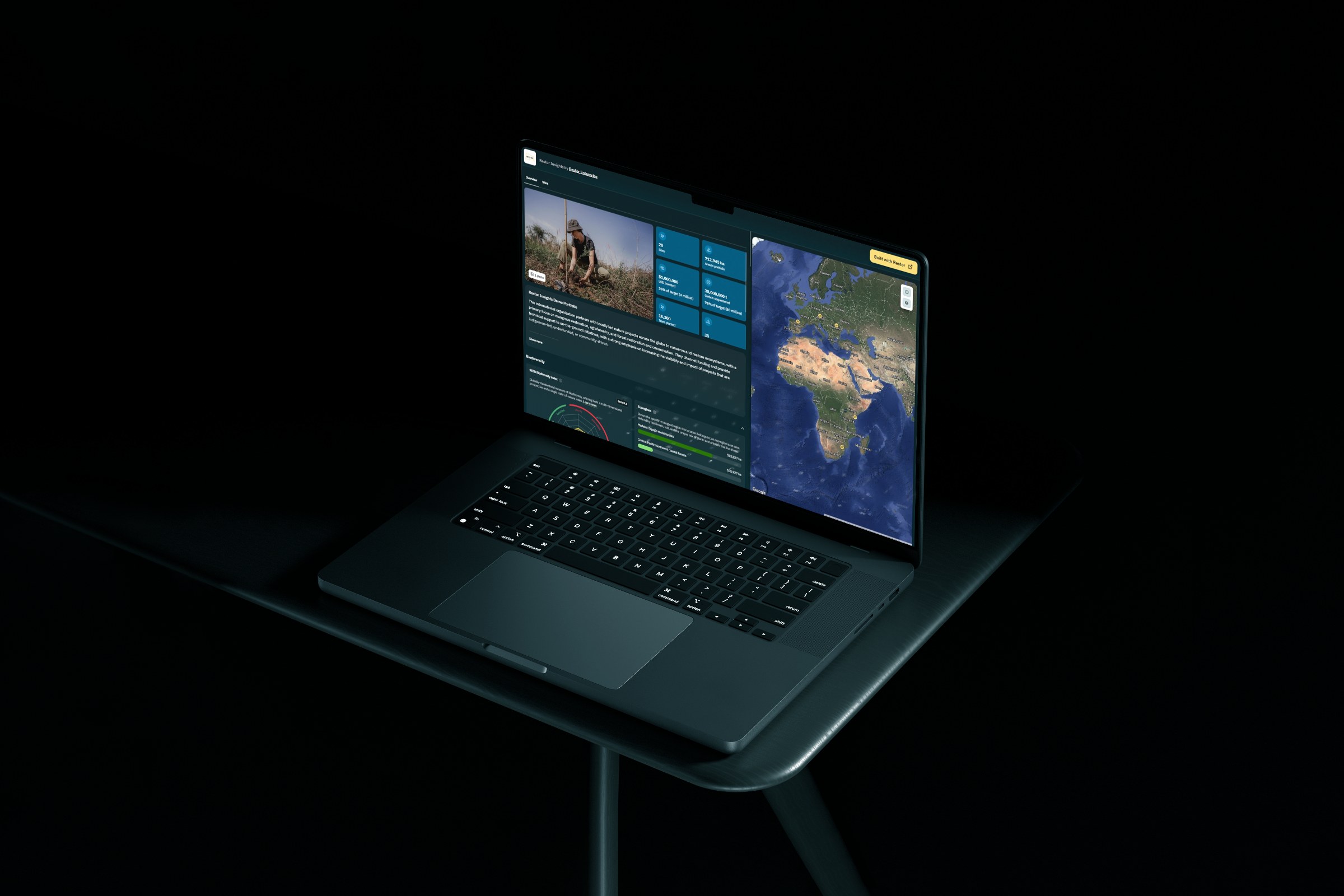
We did not build the platform. We make sure the world sees it.
Restor's product and platform were established long before we joined, and they are good. What a science-led nonprofit rarely has is a standing creative team, someone to hold the visual language steady across a dozen channels while the science, the partners, and the funding conversations keep moving.
That is the remit. We work inside Restor's brand rather than over it: campaign landing pages, the social feed, the newsletter, and the fundraising asks, produced at the pace of the organisation and answerable to the same mission.
Each campaign gets a page that can carry an ask on its own.
The RestorLife Awards and the support page are two different jobs. One has to explain eligibility, categories, dates, and a judging panel clearly enough that an NGO in the field can apply without a call. The other has to make a donation feel like a decision, not a form. Both are built from the same components, the same dark and pale-green banding, and the same restraint.
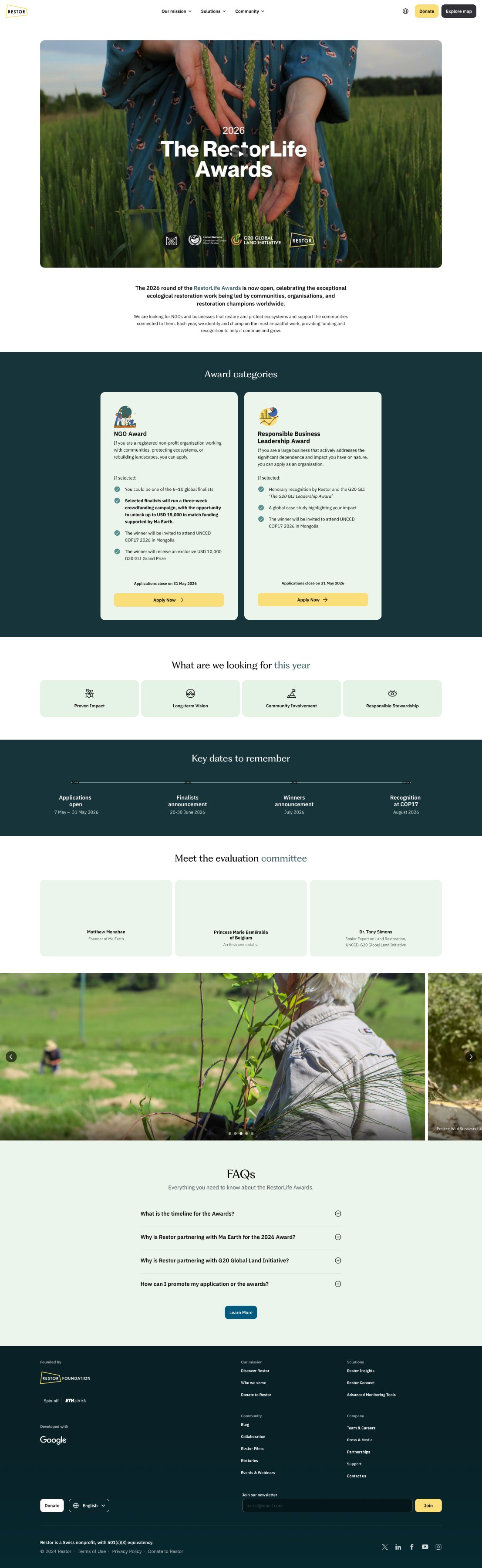
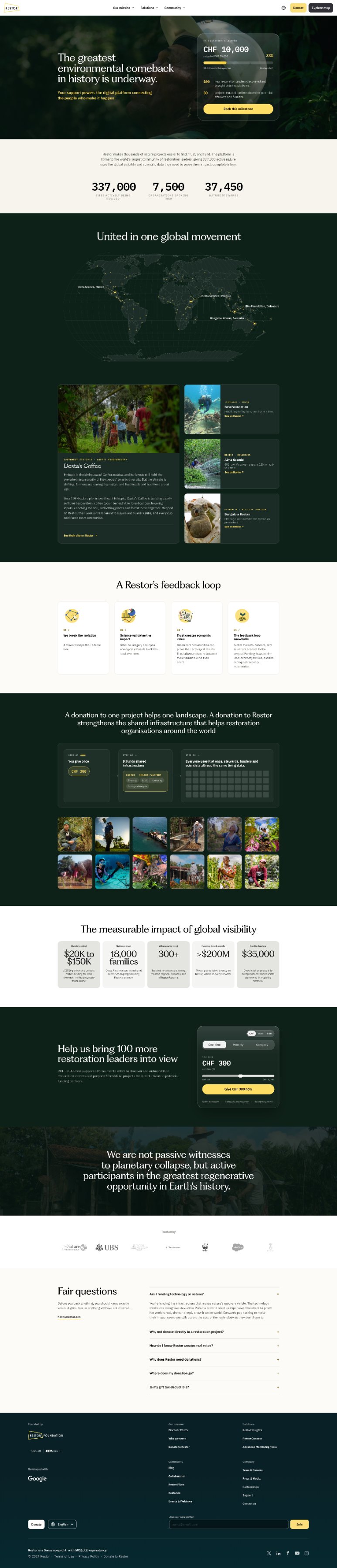
Restoration is already happening. Design decides how many people hear about it.
Photography first, type as the frame.
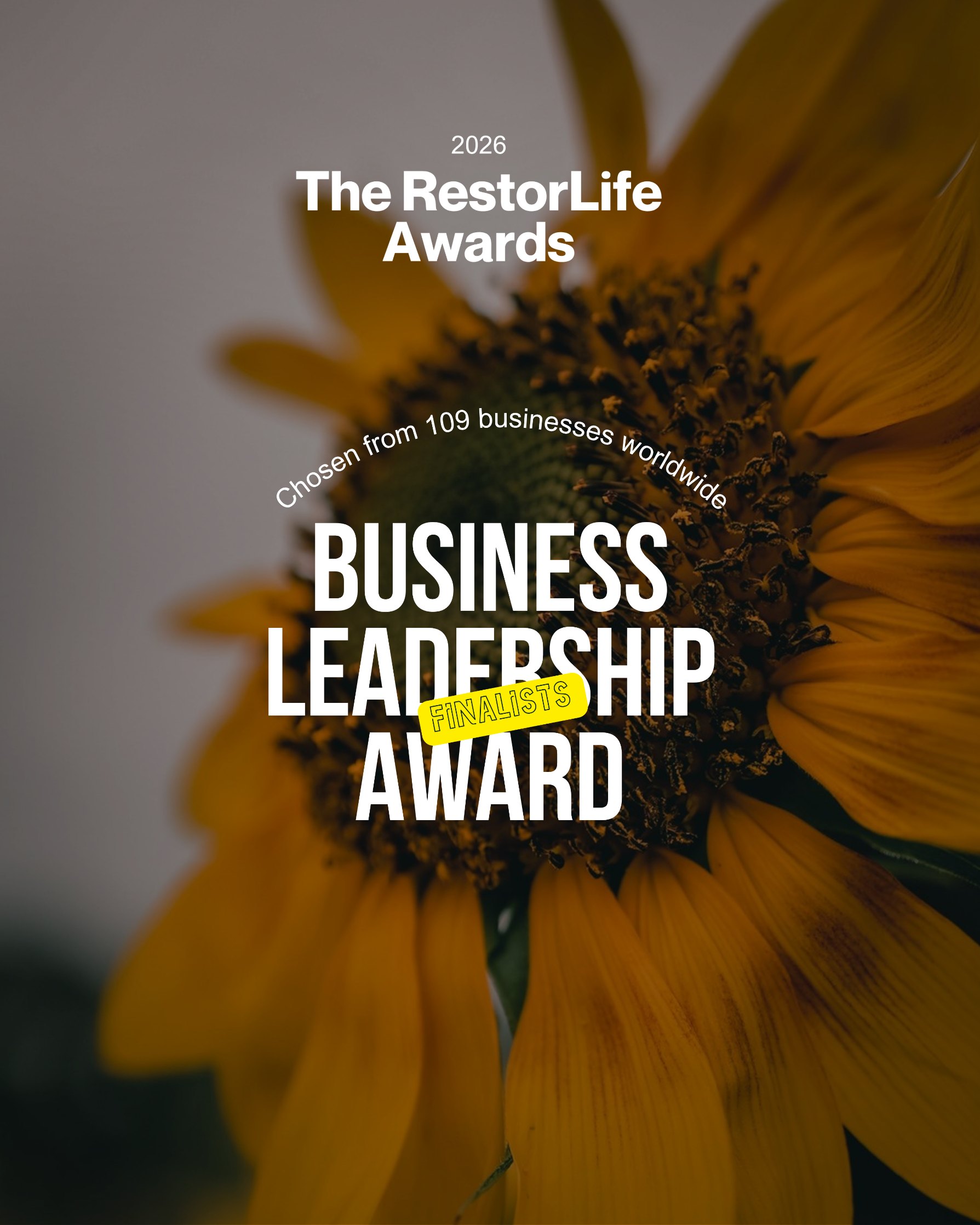
The Instagram and LinkedIn feeds run on real photography from the projects themselves, with a small set of typographic devices layered on top: an arced line for context, a highlighted marker for the news, a single yellow accent held back for what matters. Product announcements use the same grammar in the dark palette, so the feed reads as one voice whether the subject is a sunflower or a dashboard.
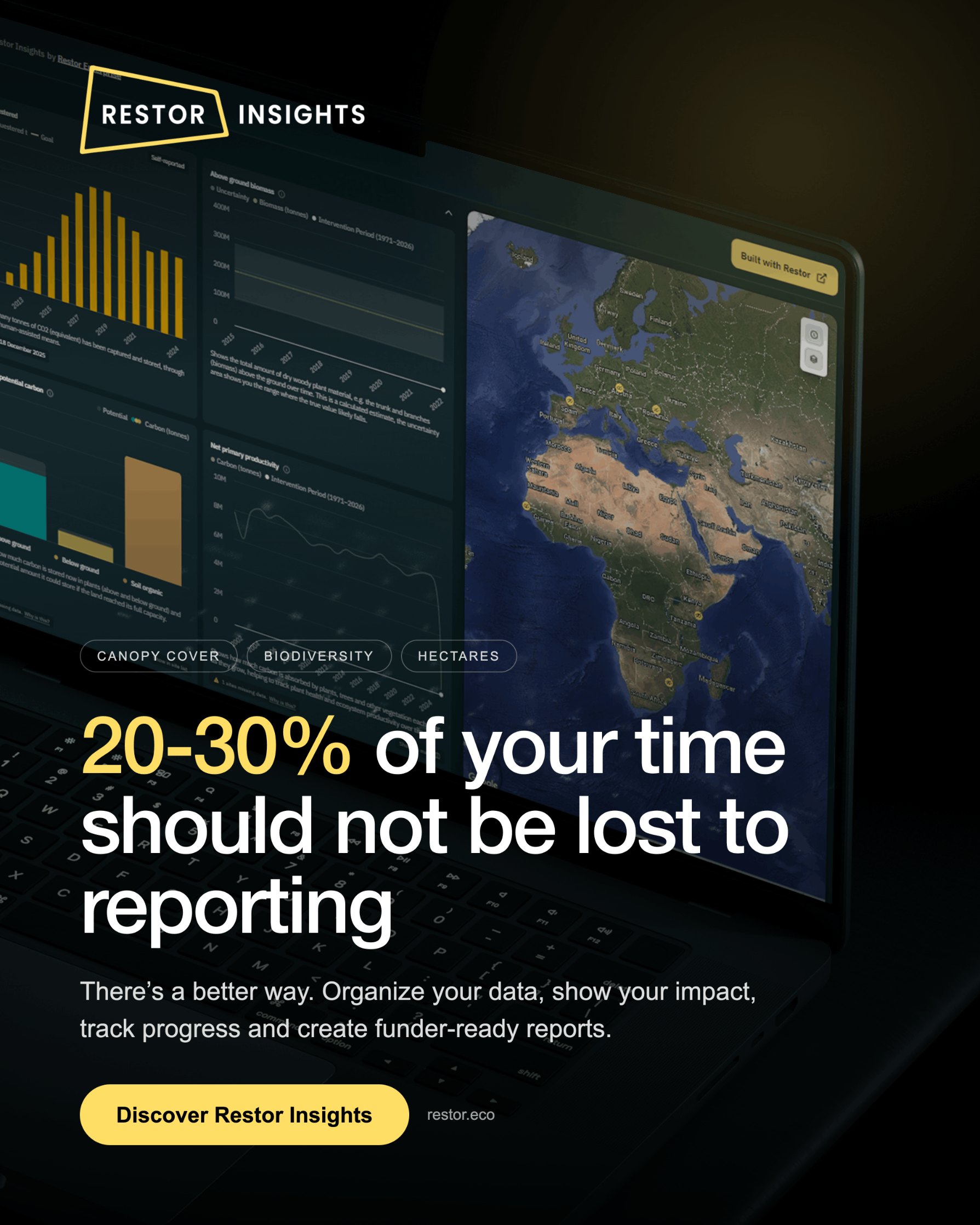
One story per send, and one thing to do about it.
Newsletters, award announcements, and donor updates are written and laid out to the same rule: lead with a project, not the organisation, and close with a single action. Templates are built to survive the real conditions of email, image blocking, dark mode, and a phone in one hand.
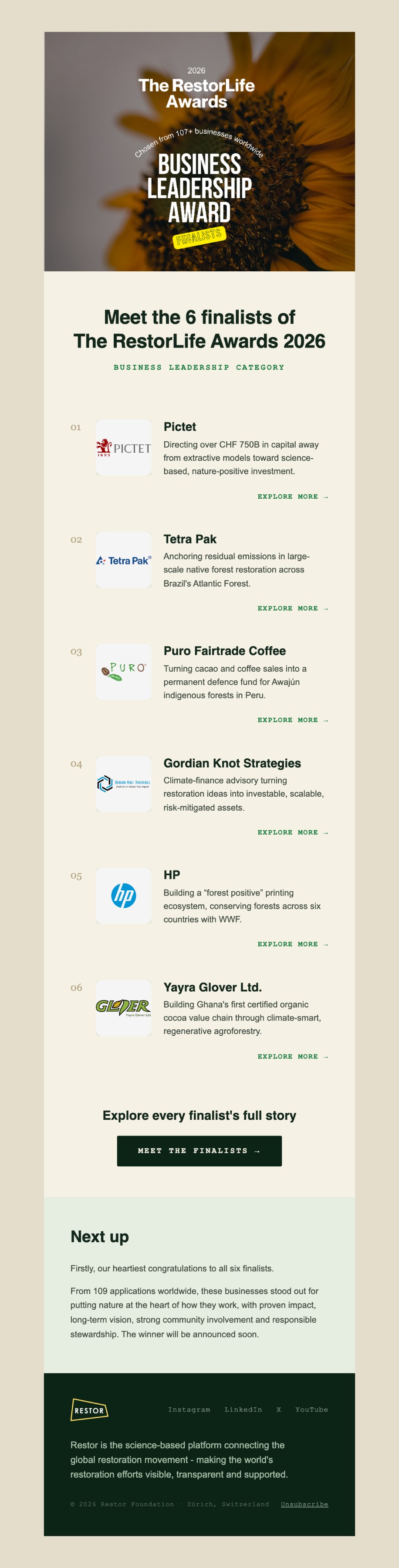

A monthly send built around one project story, with platform news kept to a short second block.
Awards invitations, deadline reminders, and finalist announcements written as one arc rather than separate emails.
What the money did, in plain language, tied back to named projects on the platform.