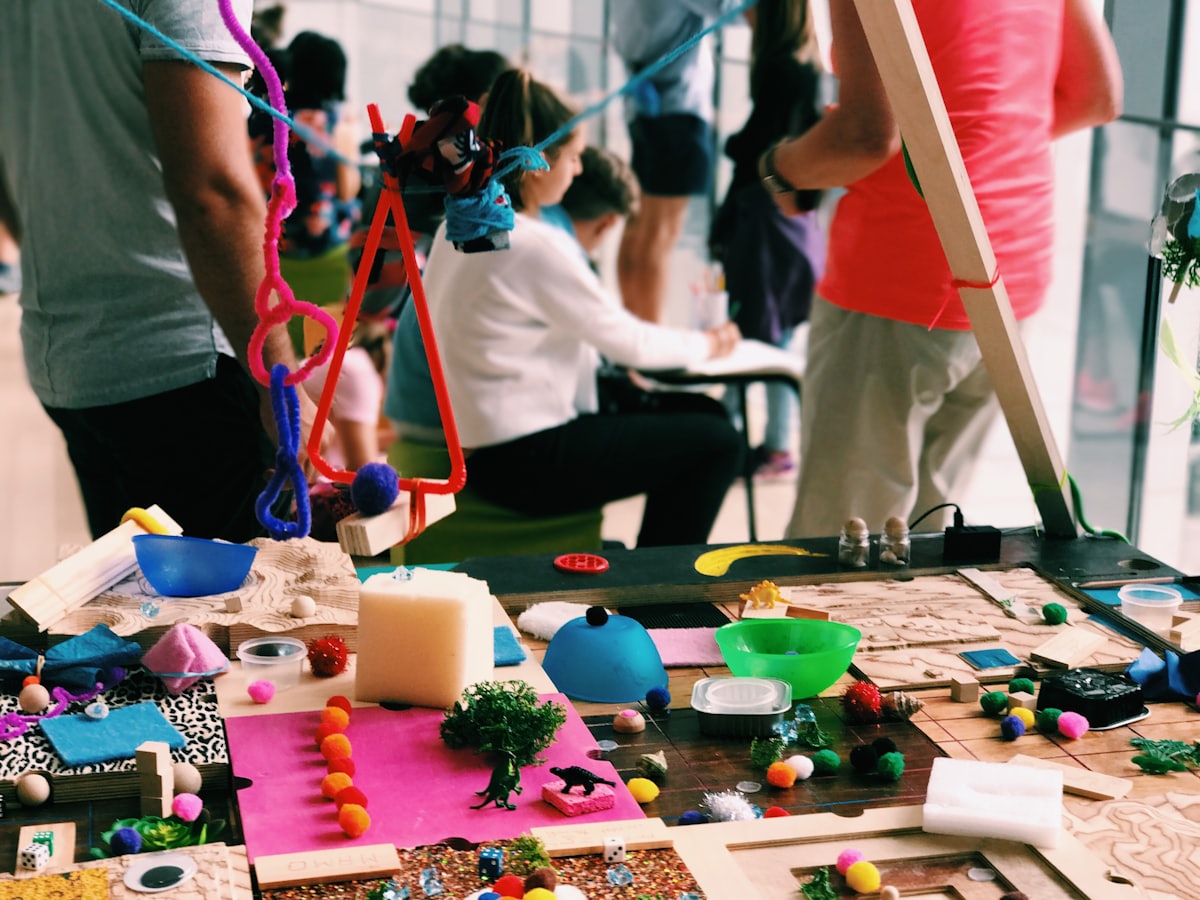
The name works against it. Say “LEGO®” in a room of senior stakeholders and half of them assume team-building, and the other half assume you are padding the budget. It is neither. LEGO® Serious Play is a facilitation method with a narrow, testable claim: if everyone in the room has to build an answer before anyone speaks, you hear from everyone, and you hear what they actually think rather than what they think is safe to say.
What it actually is
A facilitator asks a question that cannot be answered with a number: what does trust look like in this product, where does this service break down, what is the real risk in this launch. Everyone builds a model. Then everyone tells the story of their own model, in turn, without interruption. Finally the room builds one shared model out of the individual ones, which is where the disagreements surface honestly, because moving someone’s brick is an argument about the thing rather than about them.
It runs on a specific method and specific brick sets, and it needs a trained facilitator. Handing a team a box of LEGO® bricks for ninety minutes is not this, and it is the version that gives the method its bad reputation.
Why the bricks do real work
- Building is slower than talking, so the first answer out of the room is a considered one rather than the fastest one.
- Everyone presents. Airtime is structural, not social, which is the single biggest change in a room where one voice usually decides.
- The model holds the opinion, so a challenge lands on the model. People defend positions far less stubbornly when the position is sitting on the table in front of them.
- Abstract subjects get concrete. “Our onboarding feels risky” becomes a shape you can point at, and pointing is where the specifics come out.
The model, not the person, holds the opinion. That is the whole trick, and it is why the room disagrees better.

Where it works
Three situations, in our experience. Stakeholders who each believe they agree and have never had to say the thing out loud. Subjects too abstract for a whiteboard: trust, safety, dignity, what “good” means for this service. And teams with a steep hierarchy, where the useful information is held by people who do not usually speak first. On the passenger experience project we wanted to test the prototype with the LEGO® Serious Play method and get insights from real users.
When it is theatre
- The decision is already made. No facilitation method survives being used to manufacture consent, and people can tell.
- You need evidence, not opinion. This surfaces what the room believes. It does not tell you what users do. That that is a research phase.
- Nobody is writing anything down. If the outcome lives only in the bricks, it dies when the bricks go back in the box.
- There is no facilitator. Without one you get an unstructured craft session and a lost afternoon.
What should leave the room
Photographs of every model with a one-line note of what it meant. The shared model, photographed from three angles. Two or three decisions the session settled, written in plain sentences a person who was not there can argue with. And, ideally, one question the session proved you cannot answer from inside the building, which is where the research budget should go next.
Common questions
What is LEGO® Serious Play?
A facilitated workshop method in which every participant builds a model in response to a question, then explains it. Because everyone builds and everyone speaks, the method surfaces views that a conventional discussion, dominated by the most confident voices, tends to lose.
When does LEGO® Serious Play work best?
For questions about identity, strategy and shared understanding, where the group needs to hear every perspective before deciding. It is poorly suited to detailed interface or process decisions, which need sketches and data, not metaphors.
How long does a session take?
A meaningful session is half a day; a full strategic build with a shared model takes a whole day. Anything under two hours is a warm-up exercise rather than the method.